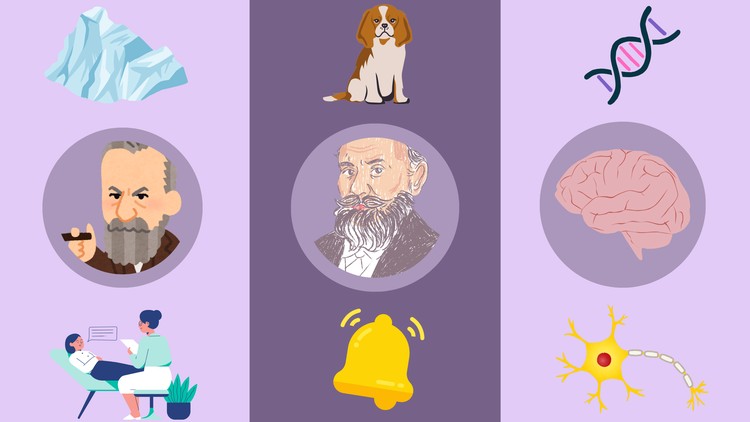
Psychoanalysis, Behaviorism, and Psychobiology
What you will learn
Learn about psychoanalysis and its components through the Freudian perspective.
Discover the world of behaviorism and its components through prominent executed experiments.
Understand the differences between classic and operant conditioning.
Dive into psychobiology and learn about the structure of a neuron, signal transmission, and neurotransmitters.
Add-On Information:‘;
}});
}});
- Explore the foundational theoretical frameworks that have shaped the discipline of psychology.
- Gain a historical context for the evolution of psychological thought, tracing the lineage of key ideas.
- Critically analyze the philosophical underpinnings and empirical evidence supporting each major perspective.
- Develop an appreciation for the diverse methodologies employed within each school of thought.
- Understand the enduring impact and current relevance of these historical perspectives on contemporary psychological research and practice.
- Identify the core assumptions and principles that differentiate psychoanalytic, behaviorist, and psychobiological approaches.
- Analyze the seminal contributions of influential figures beyond Freud in shaping behaviorism and psychobiology.
- Examine the ethical considerations and societal implications associated with different psychological paradigms.
- Synthesize the strengths and limitations of each perspective in explaining human behavior and mental processes.
- Prepare to engage in informed discussions about the ongoing debates and future directions in psychological theory.
- Develop analytical skills to dissect complex psychological phenomena through multiple lenses.
- Enhance your ability to connect abstract theoretical concepts to observable behaviors and biological mechanisms.
- Cultivate a nuanced understanding of how different psychological theories offer complementary or competing explanations for human experience.
- PROS:
- Provides a comprehensive overview of the major forces that have driven psychological inquiry.
- Builds a strong foundation for further study in specialized areas of psychology.
- Encourages critical thinking about the nature of scientific understanding in the behavioral sciences.
- CONS:
- May require significant conceptual effort to grasp the intricacies of each distinct theoretical framework.