Master health records, clinical documents, medical scribe & transcription skills for healthcare beginners & pros
What you will learn
Capture complete patient encounters with accurate HPI, ROS, exam, assessment, and plan
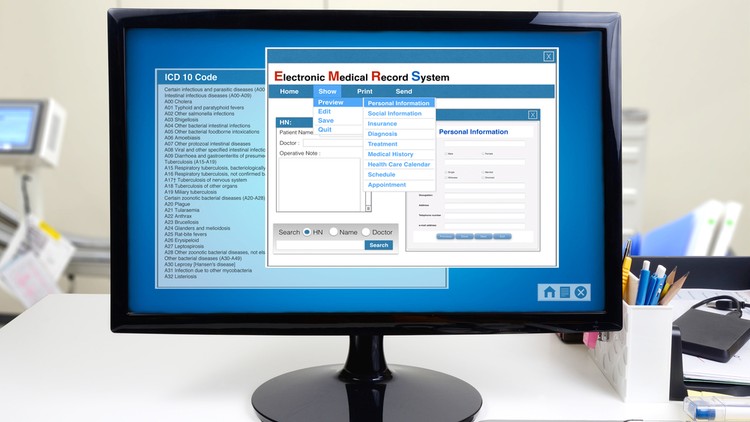
Navigate EHR workflows and templates for efficient clinical documentation
Apply scribe best practices: active listening, real-time note drafting, and provider preferences
Produce clean, compliant transcription from audio with proper formatting and timestamps
Map documentation to coding/reimbursement basics (CC, HCC, E/M alignment)
Avoid common errors and protect health data under HIPAA and organizational policy
Interpret provider shorthand and translate to clear, structured medical records
Build a job-ready portfolio: sample notes, dictations, and EHR-style case write-ups
Add-On Information:‘;
}});
}});
- Foundations of Healthcare Language: Demystify the terminology, abbreviations, and anatomical references essential for accurate medical record keeping.
- The Art of the Medical Narrative: Understand the structure and flow of a comprehensive patient encounter, ensuring all critical details are captured logically and cohesively.
- EHR Integration Strategies: Learn how to seamlessly integrate scribe duties within electronic health record systems, leveraging their functionalities for optimal efficiency.
- Active Listening Techniques: Develop sharpened auditory skills to accurately record verbal information during patient consultations and physician dictations.
- Transcription Quality Control: Master techniques for reviewing and editing transcribed reports to ensure accuracy, clarity, and adherence to industry standards.
- Compliance Essentials: Gain a working knowledge of HIPAA and other relevant regulations governing protected health information in documentation.
- Provider Collaboration: Understand the dynamics of working effectively with physicians and other healthcare providers to facilitate smooth documentation processes.
- Document Integrity and Audit Readiness: Learn strategies for creating documentation that is robust, defensible, and prepared for potential audits.
- Building a Professional Presence: Cultivate the professionalism, discretion, and attention to detail required for success in clinical documentation roles.
- Specialty-Specific Nuances: Explore how documentation requirements and common phrases may vary across different medical specialties.
- PROS:
- Equips individuals with highly sought-after skills in a growing healthcare sector.
- Provides a foundational understanding for diverse roles within healthcare administration and support.
- Offers practical, hands-on learning applicable immediately in real-world settings.
- CONS:
- May require supplementary clinical experience to fully grasp complex medical scenarios.