Learn PLC Programming & Automation: Introduction to Industrial Control Systems
What you will learn
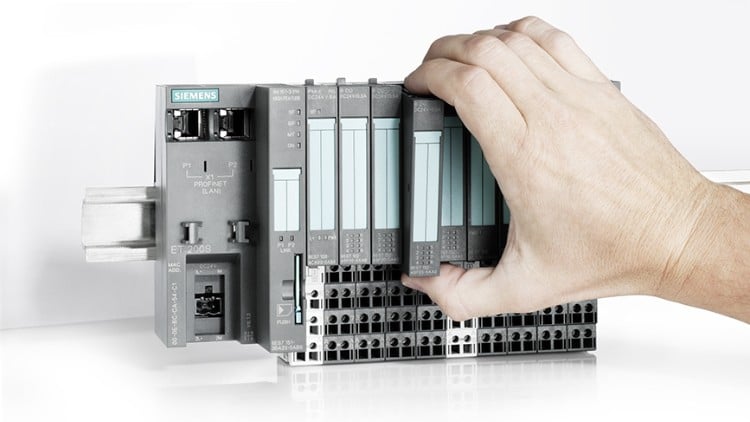
Understand PLC hardware, architecture, and communication for industrial automation with real-world applications and case studies.
Develop ladder logic programming skills to design and troubleshoot automated control systems using industry-standard software tools.
Work with input/output modules, timers, counters, and logic operations to build and test functional PLC-based automation processes.
Apply fundamental troubleshooting techniques to diagnose and resolve common PLC issues in industrial and manufacturing settings.
Add-On Information:‘;
}});
}});
- Explore the foundational shift from traditional relay logic to modern programmable automation, understanding the key drivers behind this industrial evolution.
- Grasp various industrial communication protocols (e.g., Modbus, Profinet, EtherNet/IP) essential for integrating PLCs with diverse plant-floor devices and external systems.
- Discover the crucial synergy between PLCs, Human-Machine Interface (HMI), and SCADA systems for real-time operational visibility, data logging, and centralized process control.
- Delve into advanced control strategies like Proportional-Integral-Derivative (PID) control, vital for precise regulation of continuous industrial processes such as temperature or pressure.
- Examine structured methodologies for comprehensive PLC system design, from initial requirements gathering to robust hardware selection and software architecture planning for scalable solutions.
- Understand the intricacies of industrial data acquisition and processing within PLC environments, leveraging this data for performance monitoring, predictive maintenance, and operational optimization.
- Appreciate the paramount importance of PLCs in industrial safety, covering safety-rated PLCs, emergency shutdown (ESD) systems, and the implementation of critical safety interlocks.
- Investigate modern approaches to PLC program development and testing using simulation software and virtual commissioning tools to accelerate project timelines and mitigate deployment risks.
- Uncover diverse career opportunities and wide industry applications unlocked by PLC proficiency, spanning manufacturing, energy management, water treatment, and smart infrastructure development.
- Contextualize PLC technology within the broader landscape of Industry 4.0 and the Industrial Internet of Things (IIoT), recognizing its foundational role in smart factories and integration with cloud platforms.
- Learn best practices for project documentation, version control, and system lifecycle management for PLC-based automation, ensuring long-term maintainability, troubleshooting efficiency, and compliance.
- PROS:
- High Demand & Career Relevance: Acquire a highly sought-after skill set vital for careers in industrial automation and smart manufacturing across global industries.
- Practical & Tangible Skills: Develop immediately applicable programming and troubleshooting abilities, making you a valuable asset in real-world industrial settings.
- Foundation for Advanced Tech: Build a robust technical base for understanding and integrating with advanced concepts like IIoT, industrial AI, and robotics.
- Problem-Solving Mastery: Enhance logical thinking and systematic problem-solving by designing, debugging, and optimizing complex control sequences.
- CONS:
- Continuous Learning Required: The automation landscape, with diverse vendor-specific hardware and software platforms, necessitates ongoing adaptation and continuous learning to stay current with evolving technologies.